Nerja Caves Guided Tours and Visitor Guide
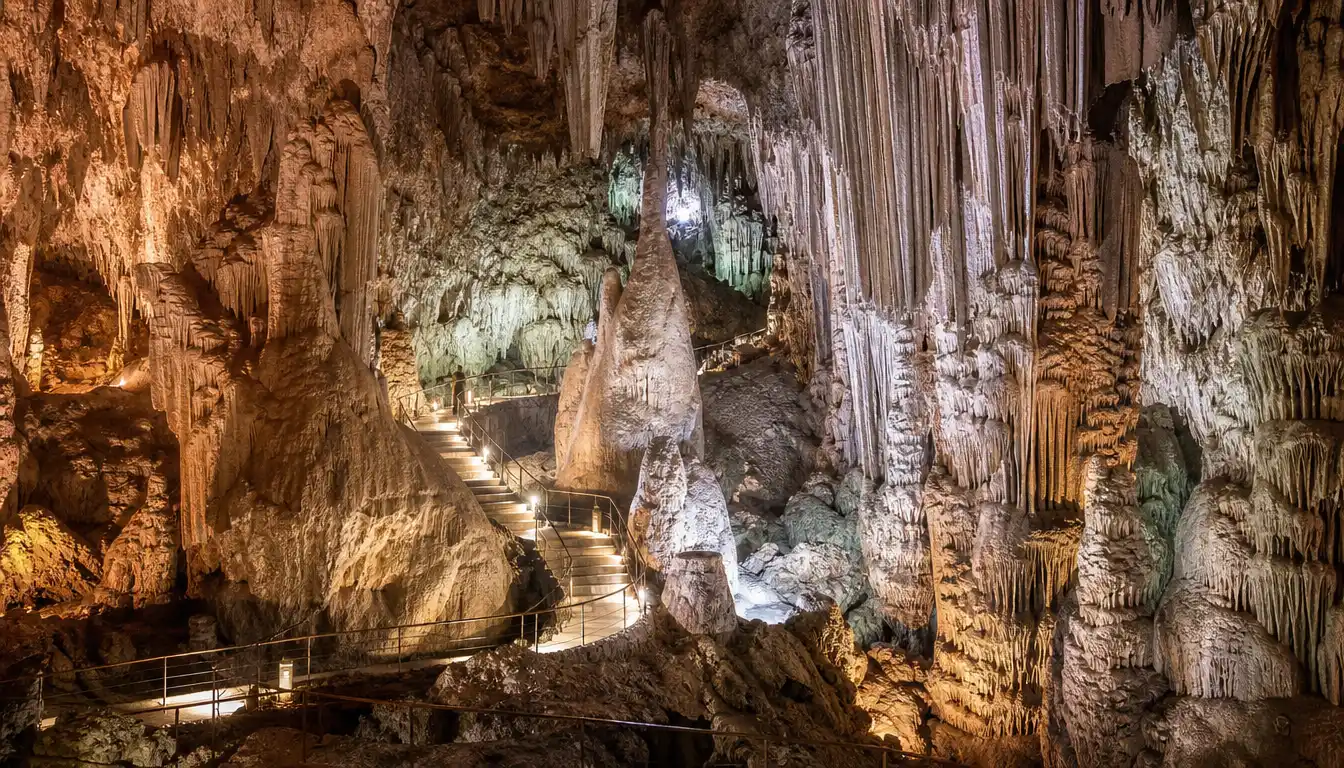
Walking into the mouth of the cavern, the hot Andalusian sun vanishes in seconds. The air turns cool, damp, and smells faintly of wet limestone. Most people book a nerja caves tour expecting a quick roadside diversion, maybe twenty minutes staring at a few damp stalactites before heading back to Burriana Beach for sardines. Instead, you step onto an elevated steel walkway suspended inside what feels like a subterranean Gothic cathedral hollowed out beneath the foothills of the Sierra de Almijara.
Discovered by five local boys chasing bats on an ordinary evening in January 1959, the complex stretches for almost five kilometers underground. Only about a third of it is open to casual visitors, but that third contains cavernous chambers with ceilings soaring over thirty meters high. This guide walks you through how to choose the right tour format, what the route feels like in real life, practical logistics inside the chambers, and whether the journey out to Maro is genuinely worth your vacation time.
Book your nerja caves experience:
What to Expect on a Nerja Caves Tour
The standard tourist route snakes through three massive interconnected public galleries known collectively as the Lower Galleries. You enter through the Vestibule Chamber, where archaeologists unearthed pottery fragments, tools, and skeletons dating back nearly 25,000 years. The lighting is deliberate and moody. Deep orange and warm white LEDs illuminate the rock textures without blinding you, though your eyes still need about five minutes to fully adjust to the dimness.
You follow a designated, one-way concrete and steel path. There is no wandering off on your own into side fissures. The ground slopes, drops, and climbs continuously over roughly 458 steps. In the Chamber of the Bethlehem, the rock draperies look like petrified waterfalls frozen mid-cascade. Then you round a corner into the Chamber of the Cataclysm, and everyone ahead of you stops dead in their tracks. It is immense.
In the middle of that vast hall stands a world-record central column. At 32 meters high and 13 meters across at its widest point, it holds a Guinness World Record as the largest known natural column on earth. Seeing photos beforehand does not prepare you for standing at the guardrail beneath it. It looks less like geology and more like something carved by an ancient civilization that had endless centuries to waste.
Note: The interior maintains a constant humidity level of around 80 percent, which makes the paths damp. Rubber-soled shoes with decent grip are mandatory; leather soles or slick flip-flops will have you sliding on the wet ramps.
A typical nerja cave visit takes between 45 and 55 minutes from the moment your group ticket barcode is scanned at the turnstile. If you like to linger, read every plaque, and take long-exposure shots, you might stretch it to an hour and ten minutes. You cannot rush through in twenty minutes because the pedestrian flow is controlled, especially on busy weekends when school groups and tour buses converge on the parking lots.
Regarding the nerja caves temperature: it stays remarkably steady at roughly 19°C (66°F) year-round. If you visit in July or August when Nerja hits 36°C outside, the cave feels like stepping into a walk-in cooler. You might want a light overshirt or linen cardigan if you chill easily, though most people find the respite from the midday heat pure heaven. In January, the cave can actually feel warmer than the brisk winds blowing off the Mediterranean.
Tour Options: Audio Guides, Live English Guides, and Malaga Day Trips
You have a few distinct ways to experience the caverns. The vast majority of travelers do the self-paced route using the official mobile application or a handheld wand. Live guided walks exist, but they run on tighter schedules and cost slightly more. Choosing between them depends mostly on whether you prefer walking at your own rhythm or having an expert geologist answer your questions on the spot.
For independent visitors, picking up the standard ticket gives you access to the nerja caves audio guide. You download the official app to your smartphone via the cave's free Wi-Fi network near the ticket gates, so bring your own wired or wireless headphones. The narration is available in 15 languages. The nerja caves english track is well-produced, voiced by native British narrators, and skips the overly academic jargon in favor of crisp storytelling about how the limestone dissolved over five million years.
Pro tip: Download the audio tour app onto your phone while you are still at your hotel. Mobile reception drops to zero the second you step beneath the rock threshold, and the on-site Wi-Fi can get choked when a hundred people try to download the audio files at the exact same time.
If you prefer an actual human leading the way, look into the specialized caves of nerja tours that offer live guides. These small-group excursions usually run once or twice a day in Spanish and English. The guides carry specialized flashlights, pointing out hidden fossil imprints, tiny roosting areas, and ancient soot marks left by prehistoric pine-resin torches that audio wands simply gloss over. Check the current schedule through the guide to Nerja Caves tickets before driving out, because seasonal changes alter the daily departure slots.
Travelers staying along the Costa del Sol without a rental vehicle often book an organized nerja caves tour from malaga. These packages usually bundle round-trip coach transport, pre-reserved entry to the caverns, and a two-hour stop in the old town of Nerja to walk the Balcón de Europa. It takes roughly 55 minutes each way along the coastal A-7 highway. It spares you the headache of navigating regional bus connections, though it does restrict your schedule to the tour operator's timetable.
| Tour Format | Approx. Duration | Language Options | Pacing | Rough Cost |
|---|---|---|---|---|
| Standard Audio Guide | 50 minutes | 15 languages (inc. English) | Self-paced within entry slot | €15 - €17 |
| Live Guided Tour | 65 minutes | English, Spanish | Fixed group pace | €20 - €25 |
| Night / Flashlight Tour | 60 minutes | Spanish (some bilingual) | Slow, atmospheric | €22 - €28 |
| Day Excursion from Málaga | 5 to 7 hours total | English, Spanish, German | Operator schedule | €38 - €55 |
There is also an after-hours night tour offered during peak months. They cut the primary gallery lights entirely, hand each visitor a small headlamp or lantern, and let you experience the subterranean void much like the five teenage discoverers saw it in 1959. It is haunting, quiet, and honestly one of the best evening activities on the eastern coast.
Practical Advice: Footwear, Photos, and Facilities
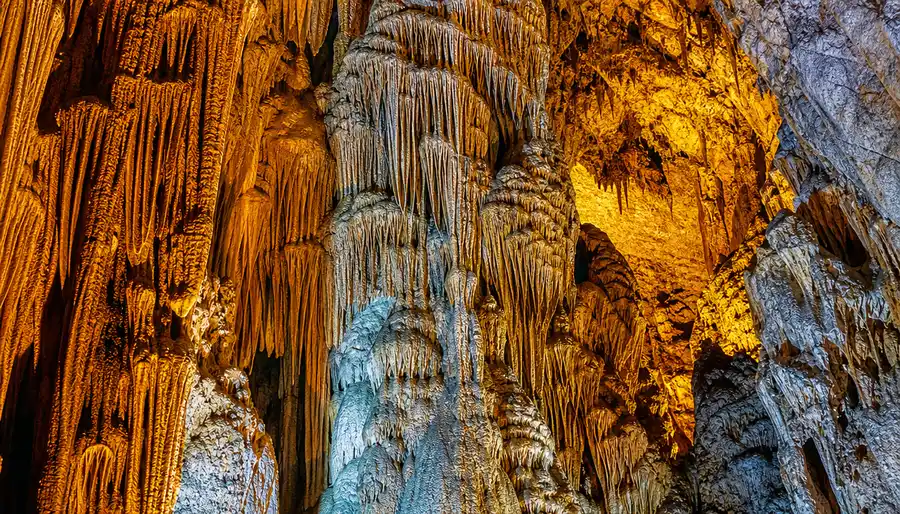
The cave is a delicate ecosystem. The authorities monitor carbon dioxide levels, humidity, and heat signatures constantly to stop green lampenflora (algae blooms caused by artificial lights) from damaging the calcium carbonate crystals. Visitors have a part to play in preserving the site too, which starts with following simple house rules.
- Wear sensible closed shoes: the route has damp metal grates, slick ramps, and wet concrete risers that ruin cheap sandals and smooth dress shoes.
- Leave large backpacks in the car: bulky trekking packs or rigid baby-carrying frames are forbidden on the walkways to avoid hitting stalagmites in narrow sections.
- Skip the camera flash: burst lighting disturbs the microclimate, annoys other walkers, and makes photos look flat anyway; switch to night mode with low ISO.
- Bring wired headphones: holding a phone up to your ear for 50 minutes gets tiring on the stairs, and loudspeaker playback is rude to others.
Taking compelling caves of nerja photos takes patience. Tripods, monopods, and selfie sticks are strictly prohibited because they create trip hazards on the steel catwalks. To capture crisp nerja caves images without flash, lean your elbows on the heavy handrails for stability, drop your exposure slider slightly down so highlights don't blow out, and wait for crowds to pass so you don't get blurred limbs in your long exposures.
Near the main entrance complex sits an open-air cafeteria and the nerja caves restaurant, known locally as Restaurante Cueva de Nerja. It features a sweeping outdoor terrace perched on the side of the ravine, offering clear views over the whitewashed rooftops of Maro and down to the sea. The food is standard Andalusian fare - plates of fried calamari, jamón serrano, simple ensaladas mixtas, and cold Cruzcampo beer. It is slightly overpriced compared to small village tapas bars in Maro proper, but the panorama makes it a pleasant spot for an espresso before driving back.
Book your nerja caves experience:
Are Nerja Caves Worth Visiting? An Honest Review
Travelers often wonder: are nerja caves worth visiting if you have already been to Mammoth Cave in Kentucky, Cheddar Gorge in England, or the Postojna Caves in Slovenia? The answer depends on what you value. Nerja does not have an underground train like Postojna, nor does it let you crawl through wild mud tunnels on the regular tourist run.
What sets Nerja apart is the pure monumental verticality of its chambers. The cathedral effect here is real. The formations are dense, old, and visually dramatic right from the entry ramp. In any honest nerja caves review, you have to acknowledge that the historic Paleolithic rock paintings - depictions of seals and goats that made global headlines years ago - are completely closed to everyday ticket holders. They sit in the Upper and High Galleries, sealed off behind heavy airlocks to keep human breath from destroying the ancient pigment. You will see high-resolution digital projections of them in the museum area, but you will not look at them with your own eyes on the standard walk.
Even without direct access to the Paleolithic art, the geological spectacles justify the detour. If you are staying anywhere between Torrox and Almuñécar, it is a non-negotiable stop. Even coming out on a bus from Málaga or Granada takes under an hour and makes for a rewarding half-day itinerary, especially if you pair it with a stroll down to the coves of Maro.
- Ideal for families: children older than five manage the handrails and stairs easily, and the scale of the caverns sparks genuine wonder.
- Tough for limited mobility: wheelchair users can only access the initial audio-visual room and the entrance plaza; the cave itself is not barrier-free due to the stair layout.
- Weatherproof backup: it makes the single best rainy-day excursion on a coast where wet weather otherwise leaves you stuck in a hotel room.
Navigating the Site: Nerja Caves Map and Nearby Maro
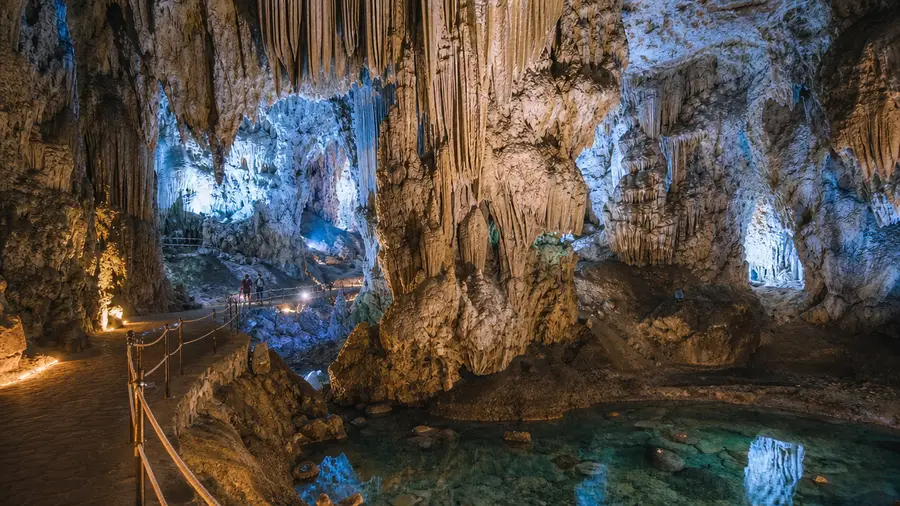
When you arrive, take a moment to look at the large nerja caves map near the ticket pavilion. The complex is spread across several levels. The central ticket office, souvenir shop, luggage lockers, and restrooms sit near the roundabout. From there, a broad paved ramp winds through a tranquil Mediterranean botanical garden featuring native rosemary, dwarf fan palms, and carob trees, leading up to the historic cave entrance.
Parking is ample, with a vast paid lot holding roughly 200 cars. It costs a flat fee of around €2 to park for the day. If you are using public transit, regular suburban buses run by the ALSA company drop passengers directly at the cave parking turnaround every hour or two from downtown Nerja and Málaga. For detailed bus lines and road routes, take a look at the guide for getting to Nerja Caves from Malaga.
Directly across the ravine lies Maro. It is an authentic, sleepy village that has resisted the heavy apartment developments found elsewhere along the coast. Walking into Maro takes roughly ten minutes via a dedicated pedestrian footbridge that crosses over the main road. After your cave visit, walk into the village square, order a plate of grilled sardines or garlic prawns at one of the small family-run bars, and sit under the church tower while the afternoon cools down. It gives the whole day an unhurried, local flavor that commercial bus tours completely miss.
Frequently Asked Questions about nerja caves tour
How long does the tour inside the caves actually take?
The walking route itself takes between 45 and 55 minutes. You should allow about an hour and a half in total to park, scan tickets, pick up audio gear, and walk through the botanical gardens.
Can I visit the Nerja Caves without booking in advance?
You can buy tickets at the window if slots remain, but during spring, summer, and holiday weekends, timeslots frequently sell out completely. Booking online at least two days ahead is strongly advised.
Is the cave tour suitable for small children and strollers?
Young kids usually find it fascinating, but strollers are strictly forbidden inside due to the hundreds of stairs. You will need to leave your pram in the locker area and use a soft baby carrier instead.
Are the prehistoric cave paintings visible on the regular tour?
No. The Paleolithic cave art is located in deeper, delicate chambers that remain sealed off from the public to preserve the climate. You can view 3D interactive scans and photos of them in the on-site exhibition hall.
Quick Reference
- Entry fee: roughly €15 - €17 for adults
- Inside temperature: constant 19°C (66°F)
- Steps to navigate: approximately 458
- Audio guide languages: 15 (English included)
- Time needed: 1.5 to 2 hours total on site
Book your nerja caves experience:
The Bottom Line
Standing beneath the massive stone vaults of Nerja is an experience that stays with you long after the beach tan fades. It feels ancient, quiet, and monumental in a way that modern tourist attractions rarely pull off. Secure your morning timeslot online, lace up a pair of sturdy sneakers, and take your time descending the damp steps into one of Spain's genuine natural wonders.
Read more about nerja caves.